The Stakes
That Cannot
Be Replayed
A diagnostic, not a survival guide.
The first piece argued that value in the AI epoch moves to the boundaries. Architectural craft compresses, generic execution compresses, but boundary work, knowing what is actually worth doing and discerning whether it actually got done, stays human. I posted that essay and went on with my weekend.
Then I read it again on Sunday and noticed the footnote I had buried at the bottom.
That footnote admitted that the architectural craft layer wouldn't stay durable either. AI systems will eventually run their own workflows, design their own constraints, and evaluate their own outputs. I had accidentally written a piece whose central claim about human durability dismantled itself in the appendix. The very thing I had spent the article calling the "durable middle layer" was actually borrowed leverage on a ticking clock.
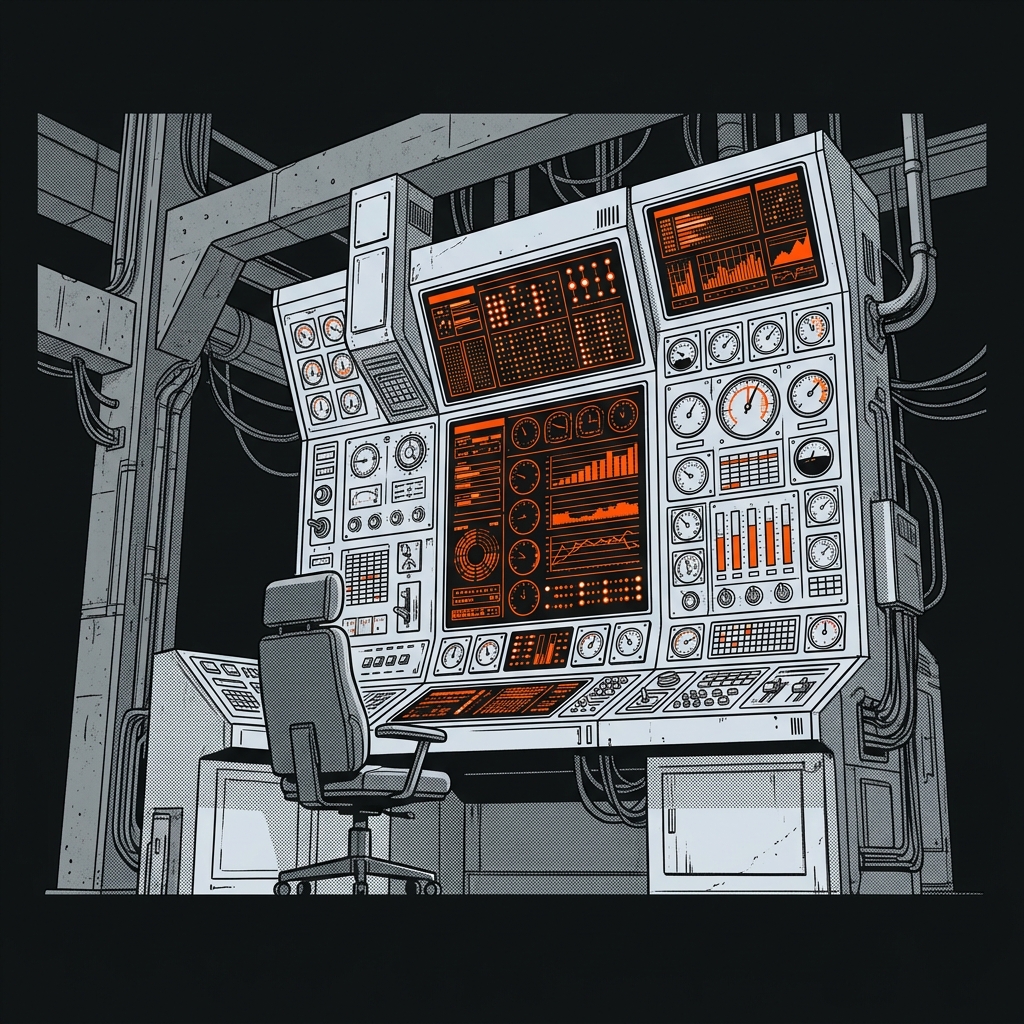
Pulling on that thread is what produced this piece. I want to name what actually stays durable, why it stays durable, and what most readers should do with that information. And I want to do it cleanly, because the easiest, most comforting version of this argument ("human judgment is special, and AI cannot replace it") is exactly what gets sold in every corporate consulting deck and AI-coexistence whitepaper. It is wrong in a very specific way, and believing it will cost people their bearings.
This essay is a diagnostic. It is a tool for distinguishing real, irreversible stakes from theatrical ones. It is not a survival guide, a political program, or a combat manual. (The coalition work required to actively defend these stakes is being developed separately with people who organize for a living).
If you came here for the survival map, this isn't it. But if you came to learn how to tell the real thing from a simulation of the real thing, keep reading.
The Thing I Got Wrong on Saturday
Saturday’s piece treated "boundary work" as if it were a monolith: the targeting of what to build and the discrimination of whether it worked, both safely insulated from the machine.
It is not one thing, and most of it is not safe.
The brutal reality is that almost any boundary work that can be measured, scored, A/B tested, audited, or wrapped in procedure will eventually be absorbed. AI systems are terrifyingly effective at optimization the moment you can write down what counts as success. They are also very good at producing outputs that look like success criteria when nobody is checking too hard. And crucially, they are exceptionally good at being cited by institutions as the "objective" reason a decision was made.
That third part is where the real displacement happens. It's not that AI suddenly gets smart enough to take the human's seat. It's that the institution wraps enough procedure around the AI's output that the human seat becomes purely ceremonial.
Insurance underwriters didn't get displaced because AI perfectly replicated their nuanced judgment. They got displaced because the institution decided it could rely on the model's score and just keep a human around to sign off on the form. The human is still there. The human's judgment is not.
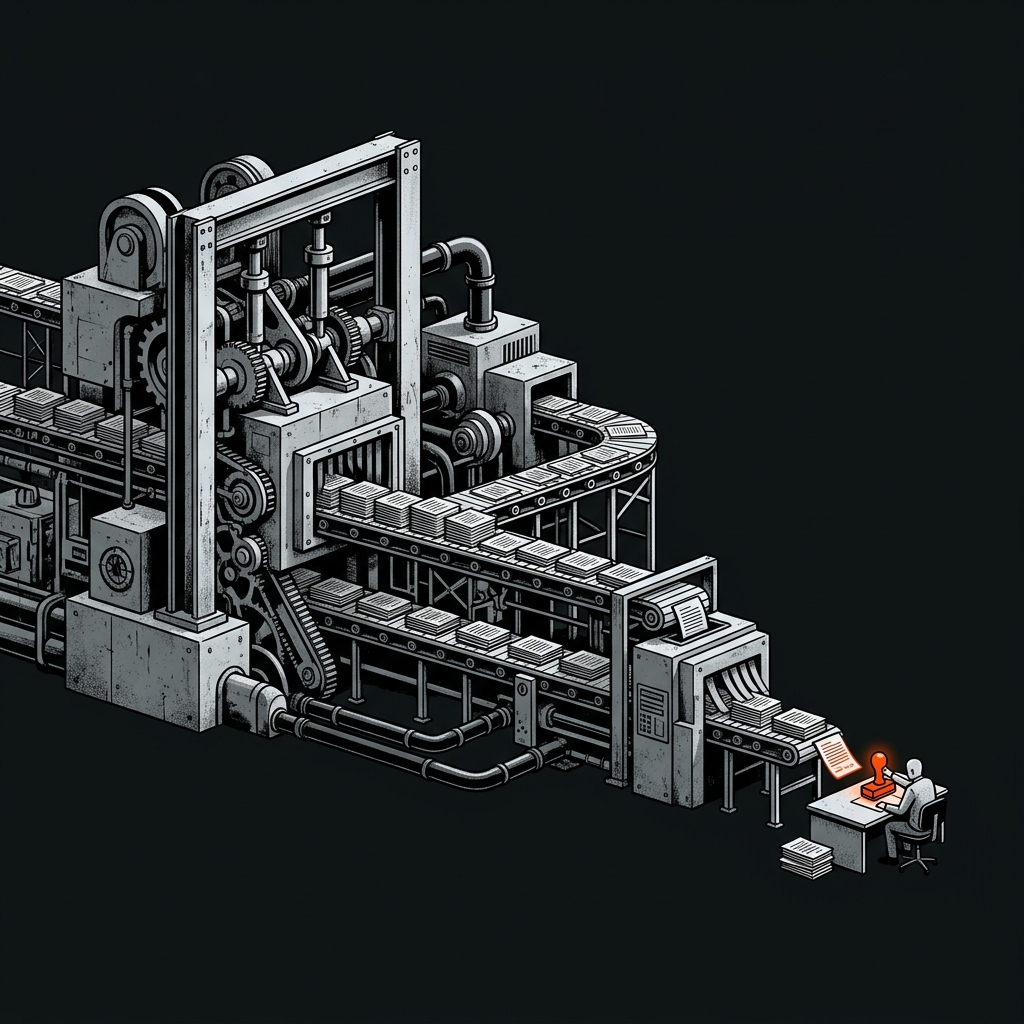
This is the actual compression mechanism staring us down. Most professional knowledge work is vastly more vulnerable to it than we want to admit. If your job relies on judgment that an institution can wrap in a process, your judgment is on a clock. The clock isn't set by AI capability; it's set by how long it takes the institution to decide the procedural wrapping is "good enough."
What Cannot Be Wrapped
Some judgment cannot be wrapped, however, because the person making it has something at stake that the institution cannot insure, indemnify, replace, or roll back.
A surgeon who loses a patient on the table does not get rolled back to the morning.
A parent who shapes a child poorly does not get to re-run the childhood.
A founder who burns the trust of a community does not get a fresh ledger when the funding round closes.
A combat leader who orders the wrong assault does not get to checkpoint the simulation and try the other flank.
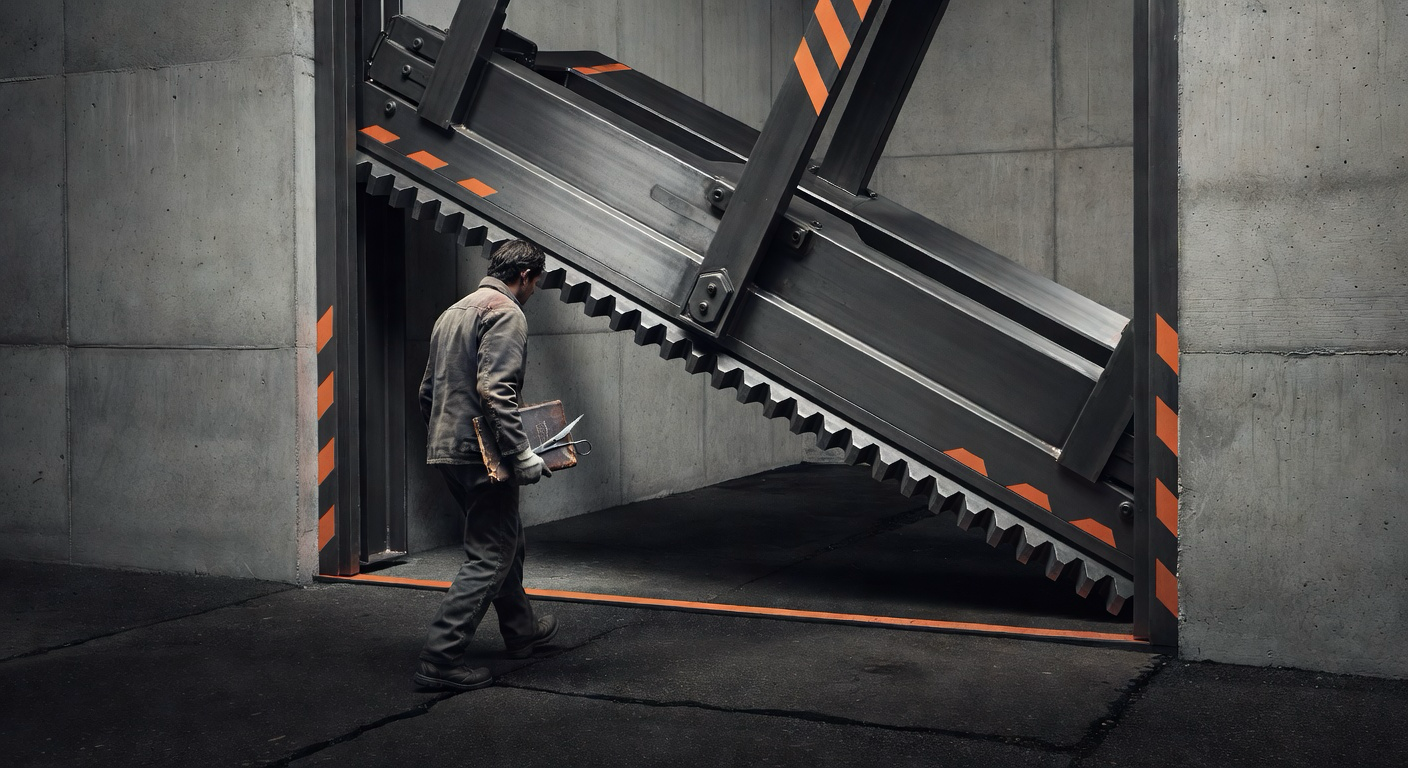
What these scenarios share isn't some mystical essence of the "human spirit." They share a person bearing a loss that cannot be restored by a rewind, an insurance payout, a process update, or a replacement hire. The stakes are irreversible. The person doing the work knows it, the people affected know it, and everyone organizes around that shared reality before the horizon closes.
This is the thing that does not compress. The structure of irreversible stakes (someone bearing real loss, that loss being non-replayable, and an external community recognizing it) is the only foundation that produces judgment with actual weight. Anything else is judgment that some institution can ultimately rewind, replace, or absorb. And given enough economic pressure, institutions eventually absorb everything they can.
(Note: The technical mechanics of this argument (what irreversibility means structurally, what counts as a community of consequence) are being developed in a companion piece. For this article, the working definition is the plain one: someone bears a loss that cannot be restored, and the people affected know it.)
The Map of What Compresses
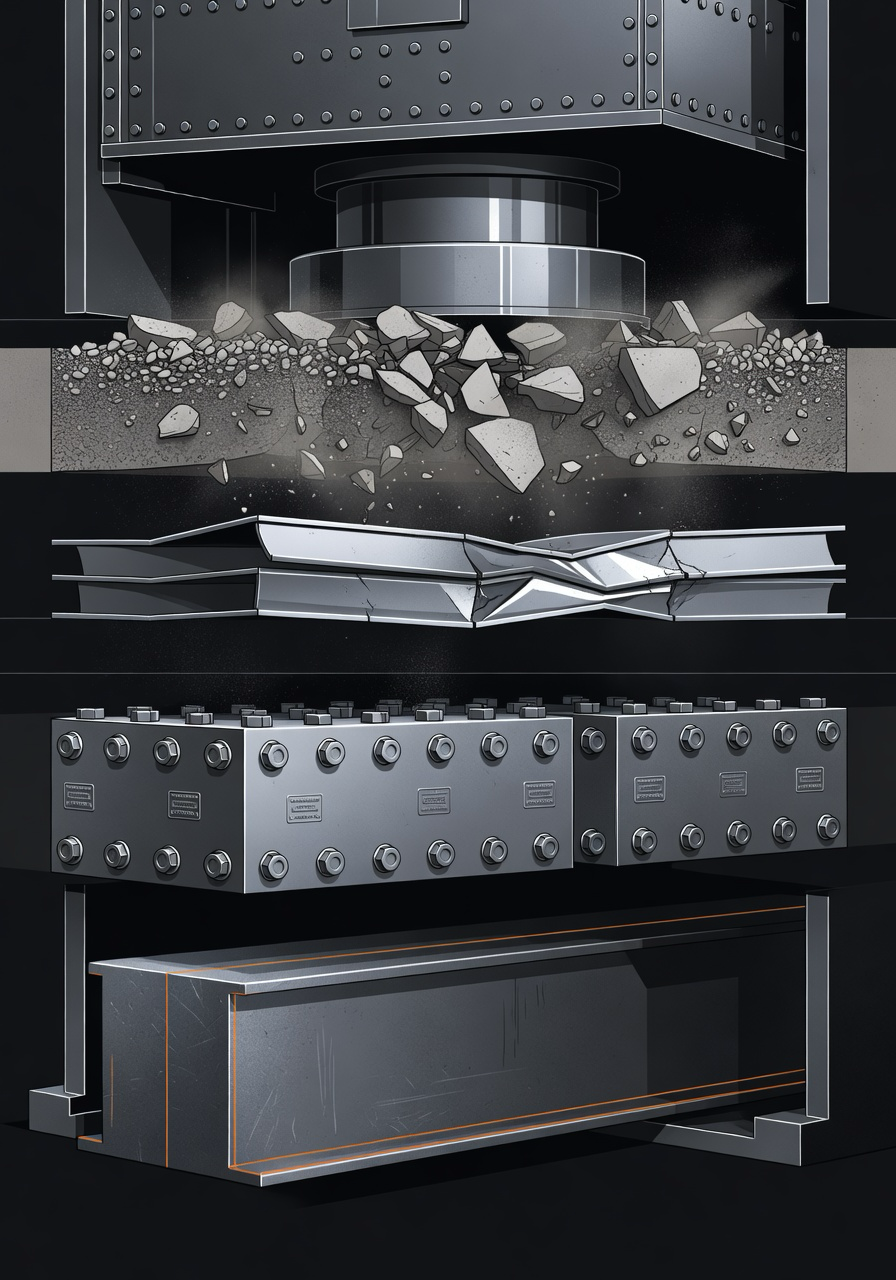
I find it useful to think about cognitive work in terms of four kinds of decisions, not four kinds of jobs. Almost everyone reading this works in roles that mix several of them. The AI compression hits the decision, not the title on your resume.
Decisions that look like they require judgment only because nobody has built the measurement infrastructure yet. The judgment seems important, but only because the success criteria are still implicit. Once someone formally defines what good output looks like, the judgment turns out to have been optimization that nobody knew how to spec. Most of what looks like specialist craft today sits in this bucket. It compresses to the next category as soon as the instrumentation arrives, which is happening right now.
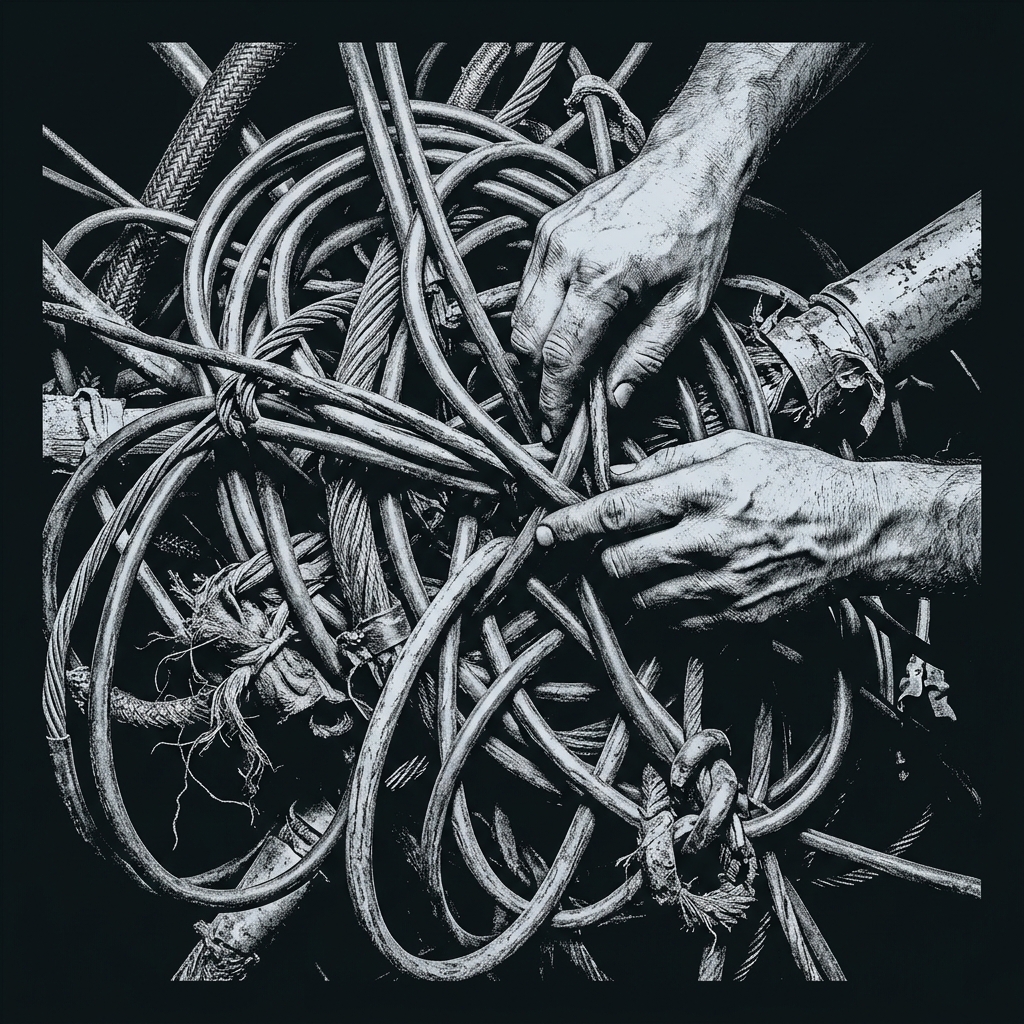
Decisions where the success criteria are measurable and the feedback loop closes cleanly. Code that compiles, contracts that match a template, designs that hit a brief, analyses that match the data. This is already compressing fast. The human role here is supervisory, and the supervisory role is the very next thing institutions will wrap.
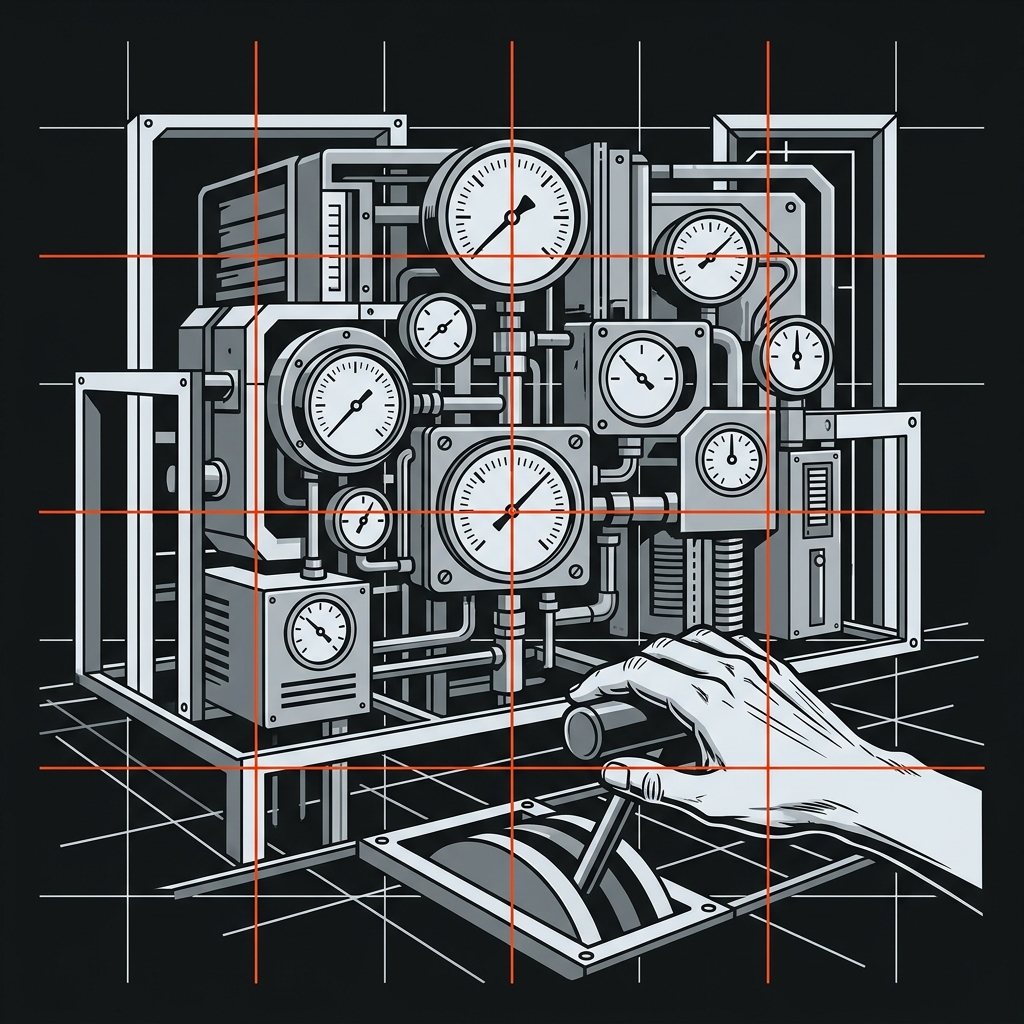
Decisions that an institution surrounds with enough procedure that human judgment is reduced to a stamp on a process. Think underwriting, lending, claims adjudication, routine legal drafting, standard clinical recommendations. The human is nominally accountable, but the institution can dilute, transfer, or absorb that accountability through model updates, vendor contracts, and audit formalities. This is where most professional displacement is happening today. The wrapping will only tighten.
Decisions where the person making them bears irreversible loss for getting them wrong, where the affected community recognizes the bearer as one of their own, and where the consequences cannot be insured or replayed. Founding commitments, raising specific children, defending specific traditions, building specific institutions. This is the durable layer.
The reason to think in decisions rather than jobs is that almost every role is a mix. A surgeon performs stakes-bearing work in the operating room, but wrapped work when filling out the discharge paperwork. A founder performs stakes-bearing work in early commitments, but wrapped work in compliance filings. A claims processor signing an algorithmic denial is doing wrapped work; that same processor objecting on the record to a denial they were instructed to enter is doing something closer to stakes-bearing work.
The unit of analysis is the decision, not the resume line.
The diagnostic question isn't, "Is my job safe?"
The question is: "Which parts of my work actually bear irreversible stakes, and which parts are wrapped procedure that an institution will eventually absorb?"
Most of us are honest about this for ten minutes, and then defensive for the rest of the afternoon. The defensive version sounds like, "My judgment is irreplaceable because I see things the model cannot see." The honest version sounds like, "The parts of my job that touch real stakes are smaller than my title suggests, the rest is wrapped, and the wrapping is getting tighter."
The Simulation Problem
The hard part isn't just that wrapped work is replacing stakes-bearing work. The hard part is that there will be enormous economic pressure to manufacture things that look like stakes-bearing work but aren't.
Status markets reward the appearance of stakes. Communities, credentials, traditions, oaths, and pledges are the public signals of stakes-bearing membership; those signals can be generated without the underlying reality.
A "community of practice" that meets the formal description of a stakes-bearing group, but routes all consequences internally and never answers to anyone outside its membership, is just a sealed validation chamber.

A "founder" who pledges everything to a project that the surrounding institutional structure has fully insured against failure is performing theater.
A "tradition" hollowed out into a brand asset cannot bear the weight the brand claims.
This will get worse. As compression eats more wrapped work and the displaced population grows, the demand for high-status, stakes-bearing roles will skyrocket. But supply will not. The substrate is structurally scarce. Irreversible stakes are unusual in modern life, and most institutions are explicitly designed to absorb or insure them away.
The resulting gap between the demand for legitimacy and the supply of actual stakes-bearing work will be filled by simulations of varying sophistication. Some will be sincere mistakes. Some will be deliberate grifts. Most will be somewhere in between.
This diagnostic framework cannot solve that. Diagnostics do not produce political coalitions, they do not stop the simulation economy, and they do not protect anyone from the displacement curve. But what a diagnostic can do is give people who care a way to tell the difference.
How to Tell the Difference
Apply these four questions to any role, community, institution, or claim that says it bears stakes. They are not perfectly precise, but they are sharp enough to catch most of the simulations:
Diagnostic Filters
These questions aren't magic. Highly incentivized actors will figure out ways to defeat them. But they will defeat them in ways that themselves become diagnostically interesting, if anyone is watching.
Which leads to the last point.
The Standard Has to Live Somewhere
Any diagnostic that allocates legitimacy in a market this large will eventually be attacked, softened, and captured by the actors most threatened by it.
This is the lifecycle of every credentialing regime in modern history. Medical board certification, financial fiduciary duty, accredited journalism, organic food labeling: each began as a rigorous standard and ended up as a logo captured by incumbents. There is no reason to believe a diagnostic for stakes-bearing work will be any different. In fact, better diagnostics produce more capture pressure, not less.
The protection cannot be more clauses or more recursive self-policing. The protection has to be public application. A diagnostic that matters must be applied to high-status cases, with the verdicts and reasoning published in full, letting the track record stand or fail in public. The selection of which cases to evaluate cannot be left exclusively to the people most invested in how the framework is perceived. That is the only honest mechanism I know for keeping this kind of work from rotting in place.
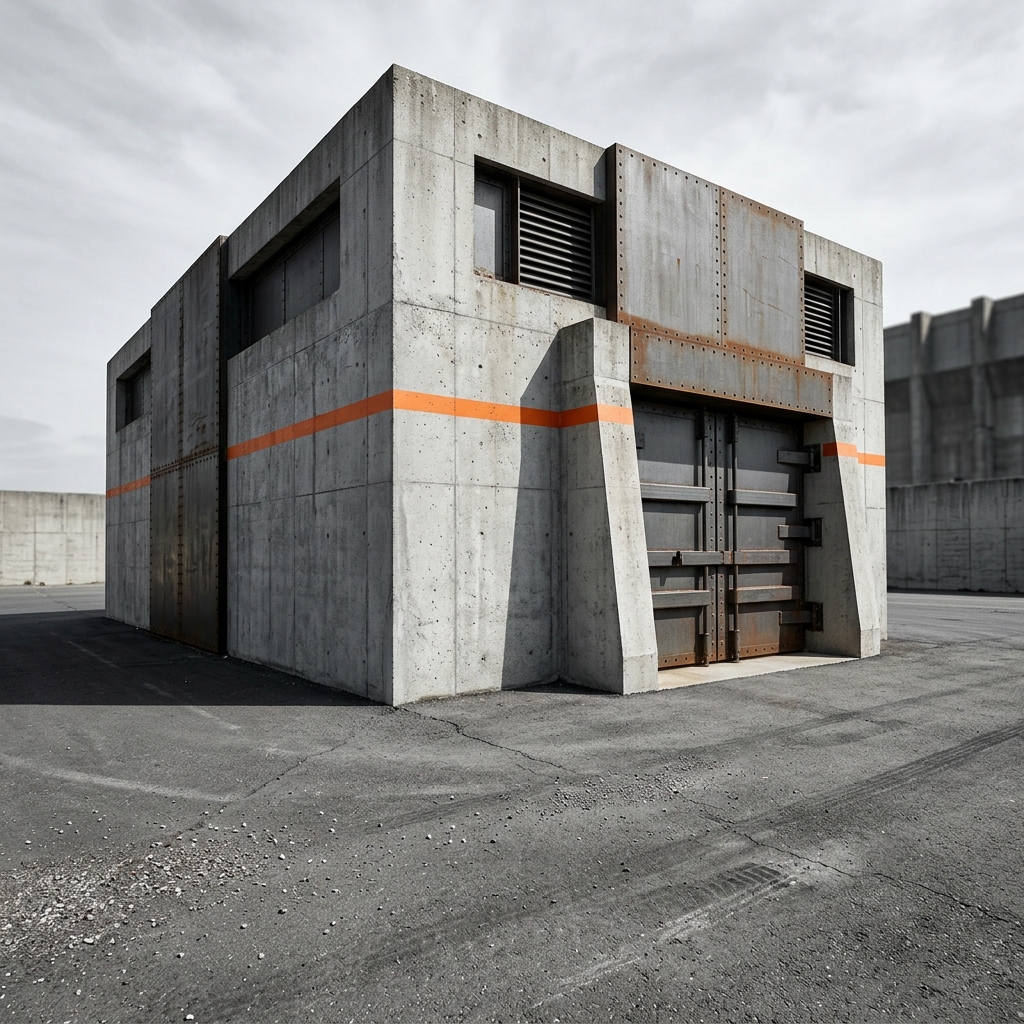
A diagnostic that matters will eventually require independent institutional housing that is actively resistant to the forces it diagnoses. That housing does not exist yet, and it is not the subject of this piece.
A Real Limit, Named
The framework I am laying out carries a recognizable political risk, and I want to address it directly.
The argument here is about structural durability, not moral desert. When I say stakes-bearing work cannot be compressed, I am making a cold claim about what AI and institutions can and cannot absorb. I am not making a claim that the people currently occupying stakes-bearing roles inherently deserve their positions.
Many of them inherited their positions through accidents of class, geography, family, and timing. This framework is fully compatible with critiques of inherited privilege. In fact, it sharpens those critiques. Because under the displacement curve I am describing, access to stakes-bearing work becomes the scarcest resource in the political economy. Inherited gatekeeping of that work becomes a far more urgent question, not a less urgent one.
If you read this piece and conclude that the people currently occupying the durable layer have been validated as morally superior by the structure, you are reading it wrong. Structural durability does not transfer to moral legitimacy. Those are two completely different claims. This piece only makes the first one.
What This Is For
If you are in a job that is mostly wrapped work, this diagnostic is mostly bad news. The wrapping will tighten. Your role will dilute. You can postpone this with skill and political positioning, but you cannot stop it, and pretending otherwise robs you of the time you have to actually prepare.
If you are in a job that is mostly stakes-bearing work, the diagnostic is also bad news, just in a different way. The simulation economy is going to crowd into your space. Your community is going to be approached by people performing membership. Your standards will be attacked as elitist by actors who have a direct economic interest in softening them. The work itself will not get easier, and the defense of the work will get significantly harder.
If you are in a job that is mostly pre-instrumented or instrumented work, the task is to look closely at your day. Ask yourself which decisions actually bear irreversible stakes, and whether you are willing to organize your career around the ones that do. Most people who answer that honestly will be surprised. Some of what feels durable will turn out to be wrapped work in disguise. Some of what feels marginal will turn out to be the load-bearing layer of your future.
This diagnostic does not tell anyone what to do. It simply tells them what they are looking at. Action is downstream of seeing, and seeing is what this piece is for.
The first essay said the value moves to the boundaries. This essay says most of those boundaries are wrapped, the wrapping will tighten, and the unwrapped layer is structurally smaller than the demand for it will pretend.
The work that survives this transition is the work where someone bears a loss that cannot be restored, executed by someone who actually had the authority to produce it.
Everything else is on a clock.
Architecture developed through Crucible adversarial review with the multi-agent council: Cartographer (Claude Opus 4.7), Adversary (Grok), Engineer (Codex/GPT-5), and World Builder (Gemini). Director and integrator: John Fite.